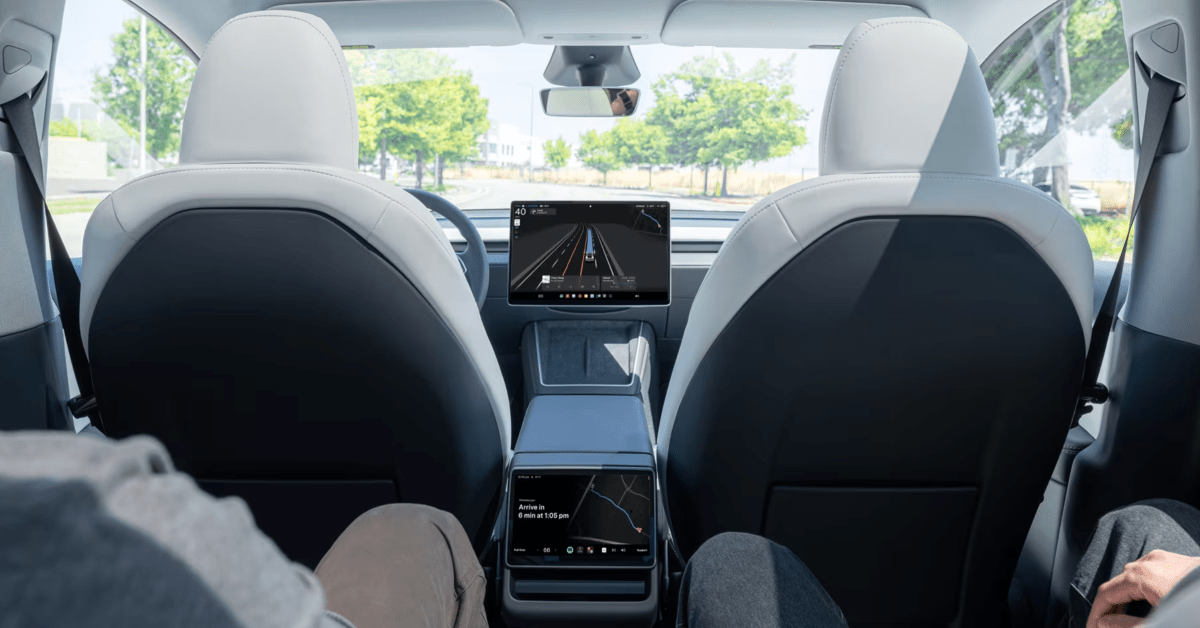
Tesla Robotaxi Unveiling Delayed to October 10: A Critical Push for Future Growth
The highly anticipated unveiling of Tesla's Robotaxi, a project Elon Musk champions as pivotal for the company's future trajectory, has been officially pushed back. Originally slated for August 8th, the reveal will now take place on October 10th. This tesla robotaxi push, confirmed by CEO Elon Musk during the automaker's second-quarter earnings call, comes amidst growing investor scrutiny, intense market competition, and persistent questions surrounding Tesla's ambitious autonomous driving capabilities. While the delay itself might surprise few given Musk's track record, it underscores the immense pressure on Tesla to deliver on its promises and redefine its growth narrative.
The Robotaxi concept represents a strategic pivot for Tesla. As the electric vehicle market matures and competition from established automakers and agile newcomers intensifies, a shift towards recurring revenue streams from autonomous services could be a game-changer. However, this ambition reportedly comes at a cost, with whispers suggesting the mass-market $25,000 Model 2 may have been deprioritized, or even shelved, to concentrate resources on the Robotaxi. This decision highlights the high stakes involved in the Tesla's Robotaxi Pivot: Saving Growth at Model 2's Expense? and the broader vision for the company's future.
The Strategic Imperative Behind the Tesla Robotaxi Push
Tesla's decision to double down on the Robotaxi project is far from arbitrary; it's a calculated move to reinvigorate growth in a challenging market. While Tesla once enjoyed an almost unassailable lead in the EV sector, rivals have caught up rapidly. Chinese behemoth BYD, for instance, has surpassed Tesla in global EV sales, offering highly competitive and often more affordable models. This escalating competition, coupled with plateauing sales targets, has put immense pressure on Tesla's stock performance and its ability to meet shareholder expectations for sustained, exponential growth.
The Robotaxi, therefore, isn't just another product; it's envisioned as a transformative service that could unlock entirely new revenue streams, shifting Tesla from a pure hardware manufacturer to a software and services powerhouse. Imagine millions of purpose-built autonomous vehicles generating revenue 24/7, with Tesla taking a significant cut. This vision, if realized, could justify the company's lofty valuation and placate investors ravenously craving the growth Tesla delivered in the past. This tesla robotaxi push is about more than just a new car; it's about redefining Tesla's core business model and securing its long-term relevance in a rapidly evolving automotive landscape.
- Diversified Revenue: Moving beyond vehicle sales to recurring service subscriptions and usage fees.
- Market Dominance: Aiming to capture a significant share of the nascent autonomous ride-hailing market.
- Innovation Showcase: Demonstrating unparalleled technological prowess in AI and robotics.
- Investor Confidence: Offering a new growth narrative to satisfy demanding shareholders.
A Recurring Theme: Musk's History of Autonomous Delays and Lofty Promises
For many observers, the latest Robotaxi delay was "surprising no one." Elon Musk has a well-documented history of making ambitious projections that often face significant postponements, particularly in the realm of autonomous driving. His near-annual pronouncements that "true self-driving is just around the corner" have become a running joke, stretching back almost a decade. Tesla famously promised over a million robotaxis on the roads by 2020, a target that has yet to materialize.
Beyond Full Self-Driving (FSD), which remains a Level 2 driver-assist system despite its misleading name, other experimental features and strategic initiatives have also been culled or pushed aside. Plans for widespread adoption of gigacasting in manufacturing were reportedly killed, infotainment support for Steam games was dropped, and even the controversial steering yoke is now a paid option rather than a standard feature. These shifts, often communicated internally to employees and sometimes followed by significant layoffs (as was the case following the Robotaxi delay announcement), contribute to a perception of unpredictability and overextension.
The challenge for Tesla now is to prove that this specific tesla robotaxi push is different. Will October 10th finally deliver a tangible, credible path to true autonomy, or will it be another presentation layered with futuristic visions that ultimately remain just out of reach? This question hangs heavy over the upcoming reveal, shaping investor sentiment and public trust alike. Musk's Robotaxi Promises: Will October Deliver True Autonomy? remains the central query.
Navigating the Technical and Regulatory Maze
Developing a truly autonomous Robotaxi system presents monumental technical and regulatory hurdles. Tesla's current "Full Self-Driving" system, despite its name, is classified as Level 2 on the SAE scale, meaning it requires constant human supervision. Achieving Level 4 or Level 5 autonomy—where the vehicle can operate without human intervention under specific or all conditions, respectively—is a monumental leap. This requires sophisticated sensor fusion, robust AI decision-making capable of handling countless "edge cases" (unusual or unexpected scenarios), and an impeccable safety record.
One critical question left unanswered by Musk during the earnings call was whether the Robotaxi would feature a steering wheel and pedals. This detail is crucial because purpose-built autonomous vehicles, like Cruise's Origin (though Cruise recently shifted away from it for taxi services), are designed without manual controls, signifying a true departure from human-driven cars. If Tesla's Robotaxi still includes manual controls, it raises questions about its true autonomous capability and whether it's truly a Level 4/5 vehicle or merely an advanced Level 2/3 system.
Furthermore, the regulatory landscape for autonomous vehicles is complex and fragmented. Safety agencies and governments worldwide are scrutinizing self-driving technology closely, especially given Tesla's FSD system has already attracted regulatory attention due to its misleading name and performance issues. Any Robotaxi service would need to navigate stringent testing, certification, and liability frameworks, which vary significantly by jurisdiction. The company's ability to demonstrate not just technological prowess but also an unwavering commitment to safety and regulatory compliance will be paramount for the success of this tesla robotaxi push.
The Road Ahead: What to Expect from October 10 and Beyond
As the new October 10th date approaches, all eyes will be on Tesla. The reveal event will be a crucial moment, not just for the company, but for the broader autonomous vehicle industry. While the exact format of the unveiling remains to be seen, investors and enthusiasts alike will be looking for concrete details, not just aspirational visions. Key questions include:
- Design Specifics: Will it be a purpose-built vehicle without a steering wheel and pedals, or a modified version of an existing Tesla platform?
- Technological Capabilities: What level of autonomy will be demonstrated? Will it be capable of true Level 4 operations in specified geofenced areas?
- Deployment Timeline: What are the realistic timelines for widespread deployment and regulatory approval?
- Business Model: How will the service operate? What are the pricing structures, and what share will Tesla take?
- Safety Protocols: What robust safety measures and redundant systems will be in place to ensure public trust?
For consumers, a successful Robotaxi launch could revolutionize urban mobility, offering a more convenient and potentially more affordable alternative to traditional ride-hailing or car ownership. For investors, a clear, executable plan for the Robotaxi could reignite confidence and provide a much-needed boost to Tesla's stock amidst its current stagnation. However, another vague promise or significant delay could further erode trust, deepening the cracks that many believe are already showing in Tesla's facade. Approaching the October 10th event with cautious optimism, balanced by a healthy dose of historical perspective, will be key.
The delay of the Tesla Robotaxi unveiling to October 10th serves as a stark reminder of the immense challenges and high stakes involved in bringing true autonomous driving to market. This tesla robotaxi push is more than just a product launch; it's a critical strategic move for Elon Musk to invigorate Tesla's growth narrative, appease shareholders, and potentially redefine the company's future. While the past is littered with delayed promises, the upcoming reveal offers a chance for Tesla to demonstrate tangible progress and prove that its ambitious vision for autonomous mobility is indeed within reach.